

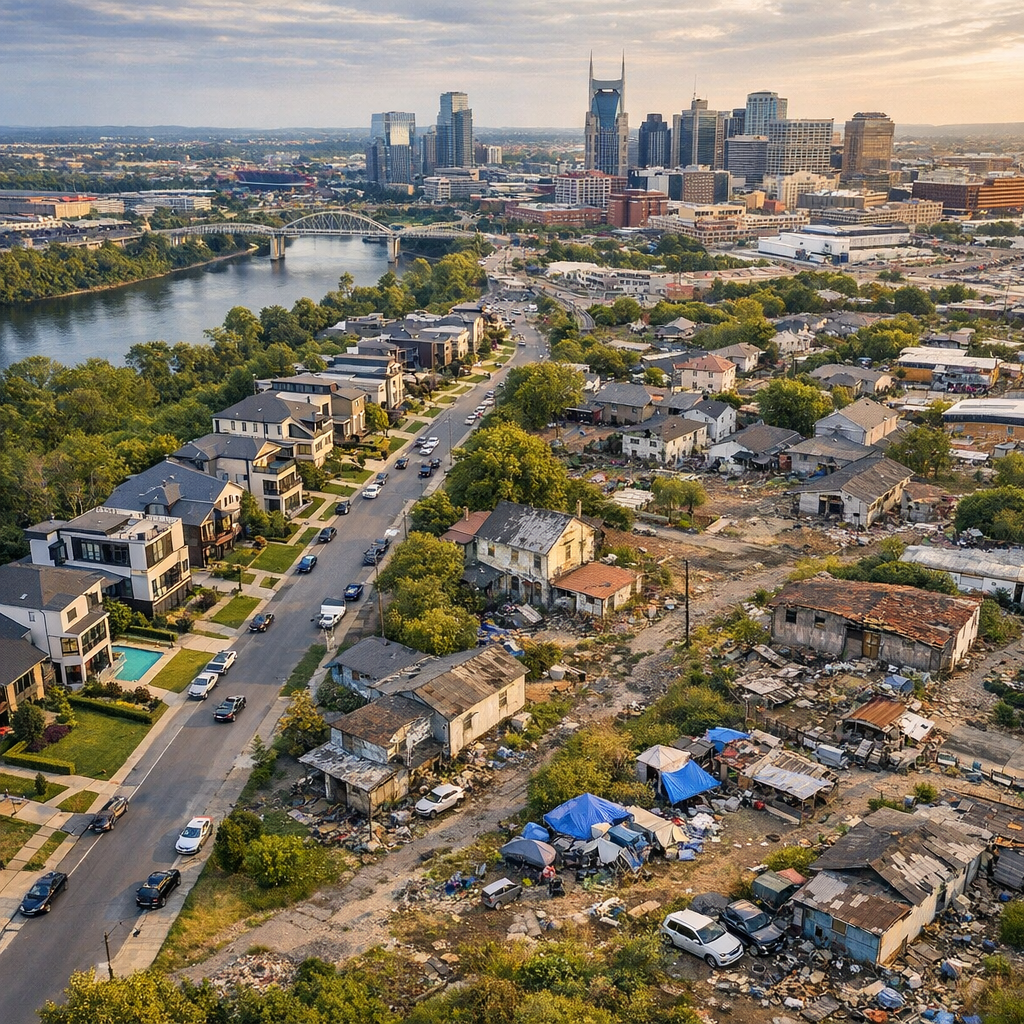
Nashville is grappling with a significant housing affordability crisis. A recent Vanderbilt University poll revealed that 82% of residents feel they cannot afford to purchase a home in Davidson County. This alarming statistic underscores the growing economic challenges faced by many Nashvillians.
Despite efforts by local leaders, including Mayor Freddie O’Connell’s Unified Housing Strategy, which supported the construction and preservation of nearly 1,800 affordable housing units in fiscal year 2025, the demand for affordable housing continues to outpace supply. The median household income in Nashville stands at $91,000, yet an annual income of approximately $120,000 is now necessary to afford a median-priced home. This $30,000 gap highlights the financial strain on middle-income families.
The affordability crisis disproportionately affects Black and Hispanic families. A housing and infrastructure study revealed that these families can afford median-valued homes in less than 1% of Nashville’s 481 neighborhoods. Historical discriminatory practices, such as redlining, have contributed to this disparity, limiting wealth generation opportunities through homeownership for minority communities.
In response, the city’s report recommends major zoning reforms, including permitting higher-density housing along transit corridors and adjacent streets, to help address the affordability and accessibility challenges faced by minority communities.
As Nashville continues to grow, addressing housing affordability remains a critical issue. Collaborative efforts between city officials, community organizations, and residents are essential to develop sustainable solutions that ensure all Nashvillians have access to affordable housing.