

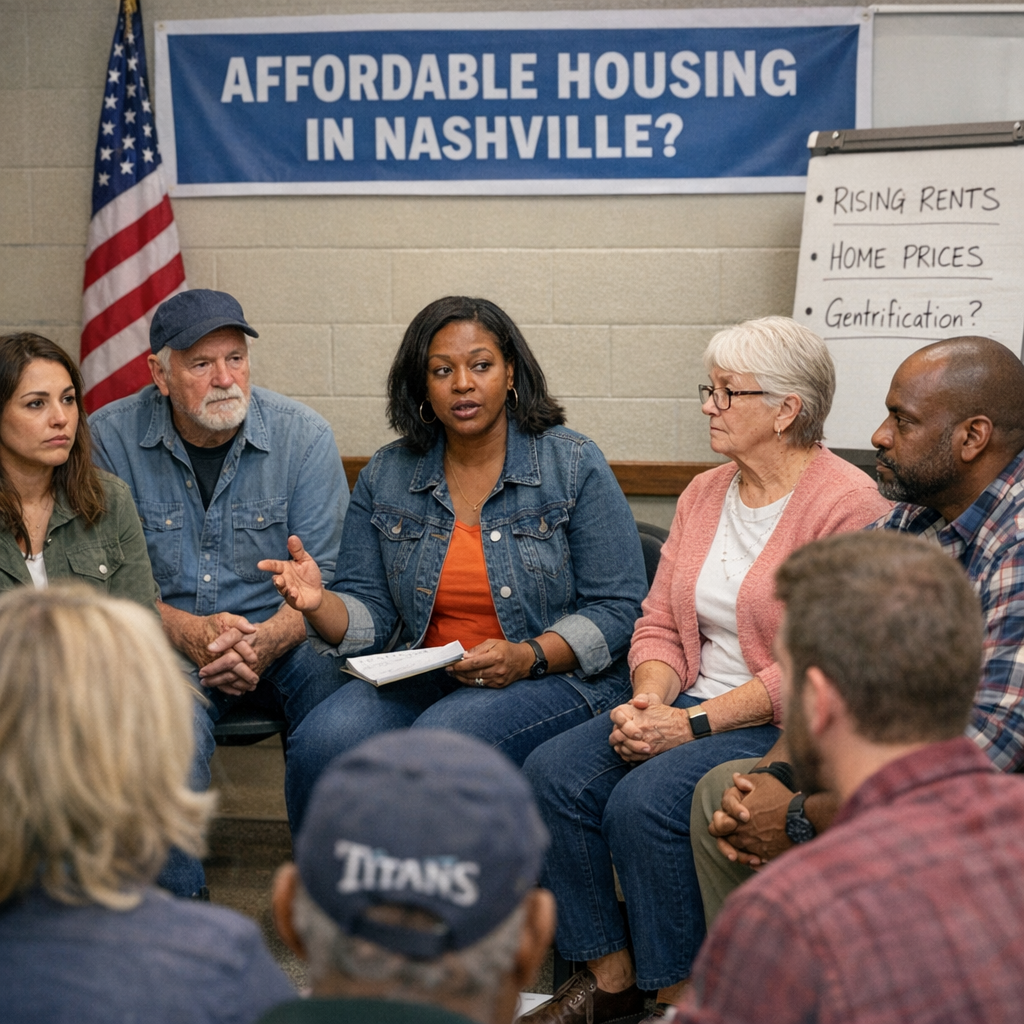
Nashville is grappling with a significant housing affordability crisis. A recent Vanderbilt University poll revealed that 82% of residents feel they cannot afford to purchase a home in Davidson County. This concern is further underscored by the fact that the median household income in Nashville is $91,000, yet an annual income of approximately $120,000 is required to afford a median-priced home. This $30,000 gap highlights the financial strain on many residents.
The crisis disproportionately affects African American and Hispanic families. A housing and infrastructure study found that Black families can afford median-valued homes in only 0.8% of Nashville’s 481 neighborhoods, while Hispanic families can do so in just 0.6%. These disparities are rooted in historical discriminatory practices and continue to impact wealth generation opportunities for these communities.
In response, city leaders are implementing initiatives to increase affordable housing. Mayor Freddie O’Connell’s Unified Housing Strategy aims to boost the supply of affordable units. In fiscal year 2025, city funding supported the construction and preservation of nearly 1,800 affordable housing units. However, public support for multifamily housing, which could improve availability, has waned, making the topic increasingly politically contentious.
Addressing Nashville’s housing affordability crisis requires a multifaceted approach, including policy reforms, community engagement, and targeted investments to ensure all residents have access to affordable housing options.