

By Emily Jones
The scale of global humanitarian crises—driven by conflict, climate change, and food shortages—is reaching levels that affect us all. Around 239 million people worldwide now require life-saving assistance. Multiple overlapping emergencies are testing international capacities and moral responsibilities. We’d be wise to understand how these crises work, what’s at stake, and what can be done.
What’s Driving the Crises?
Conflict & Displacement
Warfare remains one of the sharpest catalysts for suffering. In places like Sudan, Ukraine, Yemen, Syria, and Afghanistan, ongoing violence has forced tens of millions from their homes. For example, the conflict in Sudan alone has displaced more than nine million people internally, making it one of the world’s largest displacement crises.
Climate Shocks & Natural Disasters
Rising temperatures and extreme weather events are deepening vulnerabilities. Droughts, floods, and storms are hitting regions already under pressure from conflict or economic instability. These environmental shocks do more than damage property—they erode food systems, hamper access to clean water, and force migration.
Global Hunger & Food Insecurity
Food insecurity has reached critical levels. Some 266 million people are currently facing acute hunger—people who go without enough food to lead healthy, active lives. Conflicts in the Middle East and supply chain disruptions continue to push these numbers upward. Without access to reliable aid, entire regions risk disaster.
The Impacts on Civilians
The human toll of these crises is immense. Forced to flee their homes, civilians often lose access to schools, healthcare, and safety. Children are particularly hard hit: undernutrition, disrupted education, and trauma can affect them for life. Crisis zones also see breakdowns in civil services—sanitation, clean water, and protection from violence often collapse entirely.
Challenges Facing Aid Efforts
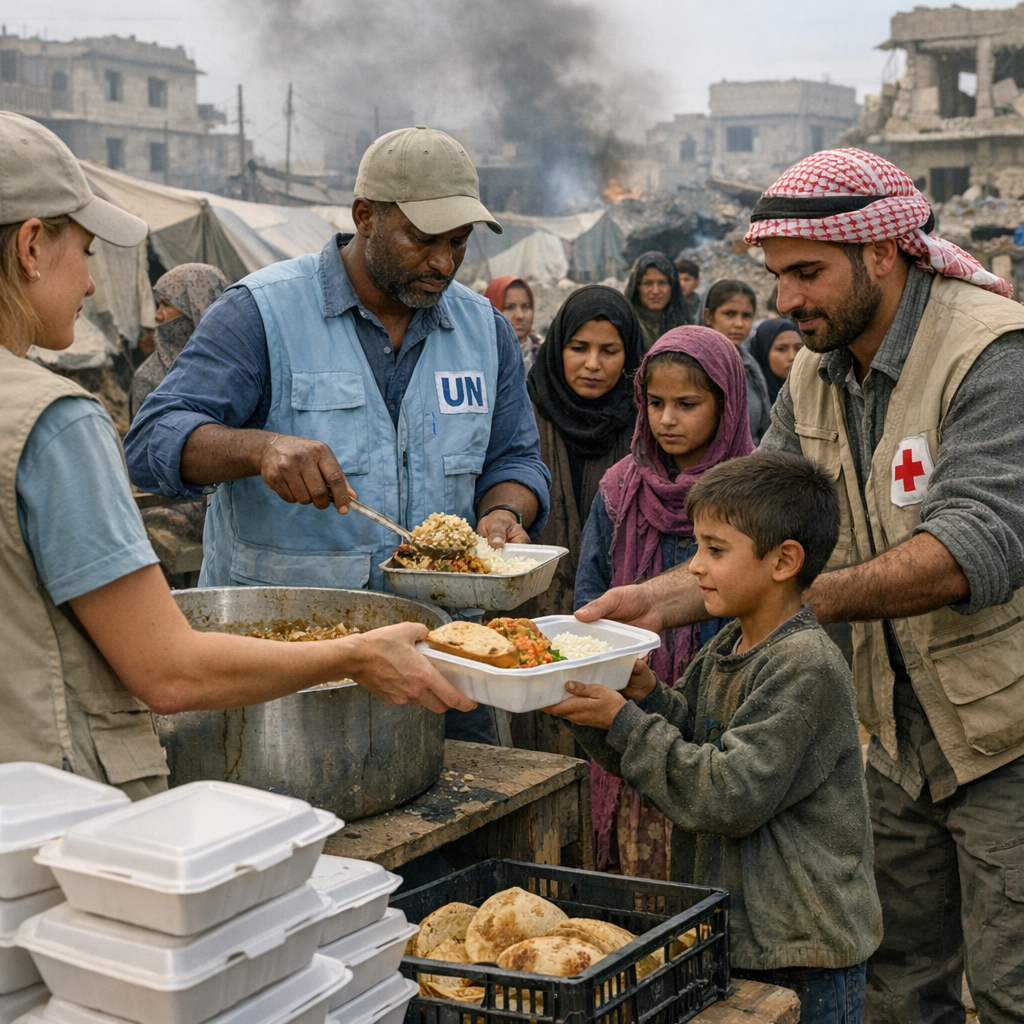
Scaling up aid in the face of so many global emergencies is a growing problem. Limited funding for humanitarian organizations is one issue. Another is access—legal restrictions, instability, and even violence make it hard for aid workers to reach those who need help. Finally, protracted crises linger for years or decades, stretching thin what should be temporary relief systems.
What Can Be Done?
Strengthen International Cooperation
Countries and institutions must reaffirm commitments to international humanitarian law and humanitarian principles. Coordinated action—both among governments and NGOs—is essential to ensure aid is delivered equitably, efficiently, and safely.
Fund Early & Flexible Response
Prevention is often far less costly than reaction. Investing early in risk mitigation—whether for climate adaptation, conflict prevention, or food reserves—can save lives. And when emergencies hit, aid that is flexible (not overly siloed) tends to have greater impact.
Support Local Resilience
Communities in affected regions often bear the heaviest burden—and are usually the first responders. Empowering them through inclusive planning, infrastructure investment, and local governance can make responses stronger and more sustainable.
Why It Matters Here in Nashville & Beyond
Global crises aren’t distant—they affect us in multiple ways. Refugee and migrant flows reshape international responsibilities and U.S. immigration policy. Disruptions to global supply chains affect prices for food and energy. Climate shocks abroad can trigger climate migration and amplify global instability. As Nashvillians who care about justice, stability, and compassion, we have roles to play—through advocacy, giving, and holding leaders accountable to what’s unfolding in the world.
The world faces deep humanitarian challenges. But there’s potential for change when committed people and institutions choose to act in solidarity. It won’t be easy—but doing so is what our shared humanity asks of us.